Post
Speed Bag Platform Set
May
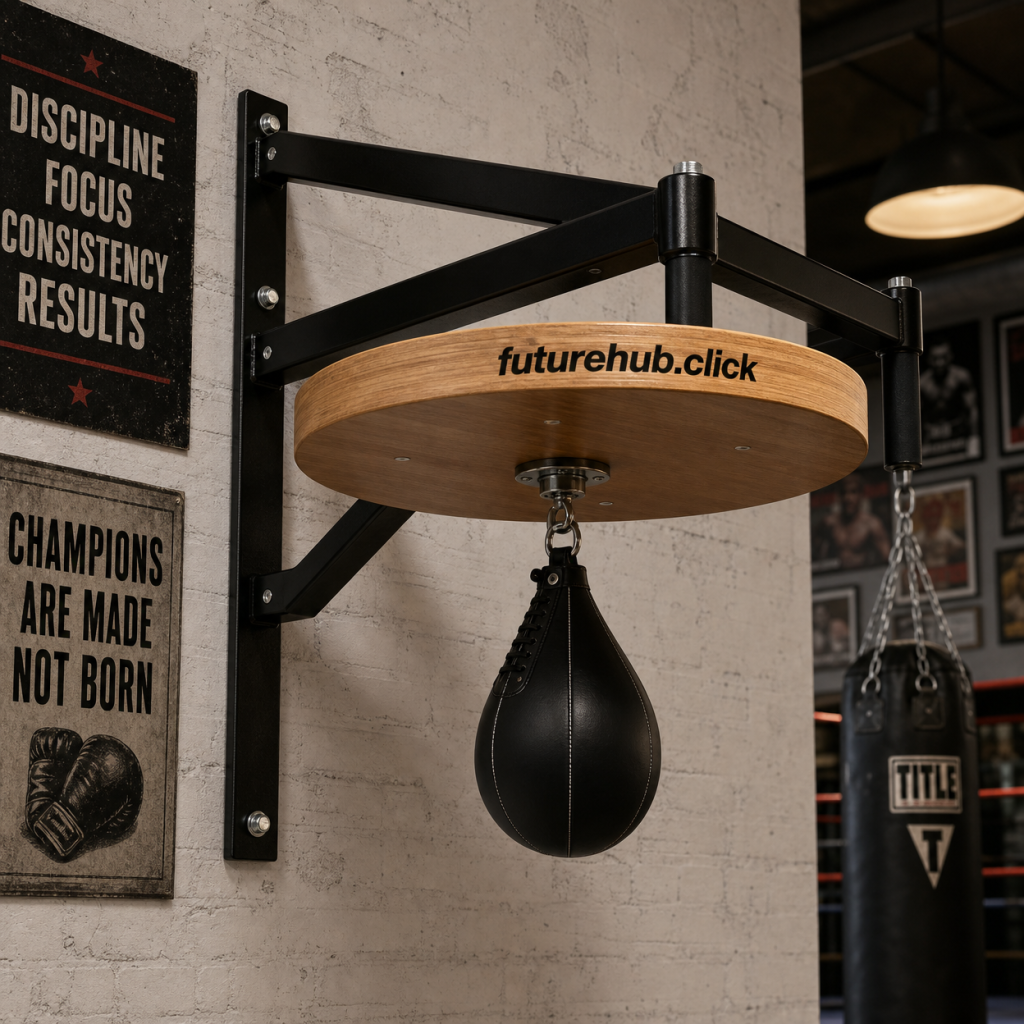
Few training tools are as associated with boxing excellence as the speed bag. The rhythmic drumming sound of a boxer working the speed bag has been the soundtrack of gyms worldwide for over a century. A speed bag platform set brings this iconic training tool into the home gym, delivering genuine boxing-specific conditioning alongside broad athletic benefits applicable to any sport.
**What Is a Speed Bag Platform Set?**
A speed bag platform set consists of three components: the platform board, the swivel mechanism, and the speed bag itself. The platform is a circular or rectangular board that mounts to a wall or freestanding frame, positioned above head height. From the center of the platform, a swivel mechanism hangs down on which the speed bag is inflated and attached. When struck, the speed bag rebounds off the platform and returns for the next strike in a rhythmic, predictable pattern.
The quality of the swivel is perhaps the most critical component of the system. A cheap, stiff swivel creates irregular, jerky rebounds that disrupt the rhythm and make the bag difficult to train with effectively. A quality swivel rotates smoothly and allows the bag to return consistently, enabling you to develop accurate timing and sustain rhythmic striking for extended periods.
**The Athletic Benefits of Speed Bag Training**
Speed bag training develops a constellation of athletic qualities that are difficult to develop through conventional training methods alone. The most obvious benefit is hand speed — the ability to deliver strikes in rapid succession requires the shoulder, elbow, and wrist to generate force and recover quickly in a tight movement arc. Regular speed bag training measurably increases the neurological efficiency of these movements.
Hand-eye coordination is trained intensively by the speed bag. Because the bag returns at a predictable but quickly changing angle and timing after each strike, the practitioner must continuously track the bag visually and time each strike precisely. This continuous tracking and timing challenge develops visual-motor coordination that benefits catching sports, combat sports, and any activity requiring hand-eye precision.
Rhythm and timing are perhaps the most prized qualities developed by the speed bag. Maintaining consistent strike rhythm against a rebounding bag requires the practitioner to internalize a precise time interval and replicate it strike after strike. This rhythmic awareness transfers to all cyclical athletic activities and contributes to the fluid, efficient movement patterns associated with high-level athletic performance.
The cardiovascular and muscular endurance demands of sustained speed bag work are substantial. Maintaining continuous striking for two to three minute rounds — the standard boxing round duration — at moderate to high intensity elevates heart rate significantly and fatigues the shoulder girdle and arm muscles in a way that develops sport-specific endurance. Three to five rounds of speed bag work constitutes a legitimate cardiorespiratory conditioning session.
**Choosing the Right Bag Size**
Speed bags come in multiple sizes, typically ranging from small (8×5 inches) to large (13×10 inches). Bag size affects the rebound speed and training character significantly. Smaller bags rebound faster and are more challenging to control, making them appropriate for experienced practitioners developing advanced timing. Larger bags rebound more slowly and are considerably easier to hit consistently, making them ideal for beginners learning the basic rhythm and technique.
For most home training setups where the primary goal is conditioning rather than competitive boxing preparation, a medium bag (10×7 inches) provides an excellent balance of challenge and achievability. It rewards consistent practice with measurable improvement in rhythm and timing without being so fast and unpredictable that it becomes discouraging for beginners.
**Platform Installation and Height Adjustment**
Proper installation is essential for safe and effective speed bag training. Wall-mounted platforms should be secured to studs or masonry with appropriate hardware capable of supporting the vibration and dynamic loading of consistent striking. Ensure the wall structure is sound before installation.
Height is the most critical adjustment. The bottom of the speed bag should be positioned at approximately chin to mouth height when you are standing in your natural punching stance with arms raised. This height allows you to strike the bag at the optimal angle for consistent rebounding while maintaining a position that develops real boxing posture and technique.
Many platforms offer height adjustment mechanisms that allow you to fine-tune positioning. This is particularly valuable in household environments where the equipment will be used by people of different heights.
**Learning the Basic Rhythm**
Learning to work the speed bag effectively requires patience and systematic progression. Begin with dominant-hand only striking, focusing on establishing a consistent rhythm where the bag makes three rebounds — one forward and two backward — between each strike. This three-hit rhythm is the foundation of all speed bag work.
Once the single-hand rhythm is comfortable and consistent, introduce the non-dominant hand using the same three-hit pattern but on alternate sides. Finally, combine both hands into a continuous alternating pattern. This full technique takes most beginners several weeks of consistent practice to develop into something resembling fluent, rhythmic boxing.
**Conclusion**
A speed bag platform set is a distinctive and effective training tool that develops physical qualities — hand speed, timing, coordination, shoulder endurance — that few other pieces of equipment can replicate. Beyond the physical benefits, the rhythmic mastery of the speed bag provides a deeply satisfying form of moving meditation that keeps training motivation high. For boxers, martial artists, athletes, and fitness enthusiasts alike, the speed bag delivers unique value in every session. Rhythm Training: The speed bag develops timing skills through repetitive practice at progressively higher speeds. Beginning with very slow rhythms allows the nervous system to learn coordination patterns. As you accelerate your system must adapt to faster cycles. Hand Speed: Hand speed improvements result from muscular adaptation and neurological efficiency. Muscular adaptations include increased recruitment of fast-twitch fibers. Neurological improvements include more efficient motor program execution. Cross-Sport Training: Speed bag training enhances performance across numerous sports beyond boxing. Baseball players develop hand speed and eye-hand coordination. Tennis players enhance racket speed and timing.
