Post
Power Tower Pull Up Station
May
Power Tower Pull Up Station: The Ultimate Guide to This Versatile Home Gym Essential
A power tower pull up station is one of the most valuable pieces of equipment you can add to a home gym. Combining multiple exercise functions into a single, self-contained unit, a power tower enables users to perform the most important bodyweight exercises for the upper body and core without needing a separate pull-up bar, dip bars, or a dedicated ab station. For anyone serious about developing upper body strength, muscle mass, and functional fitness using bodyweight training, a power tower represents outstanding value and utility.
What Is a Power Tower?
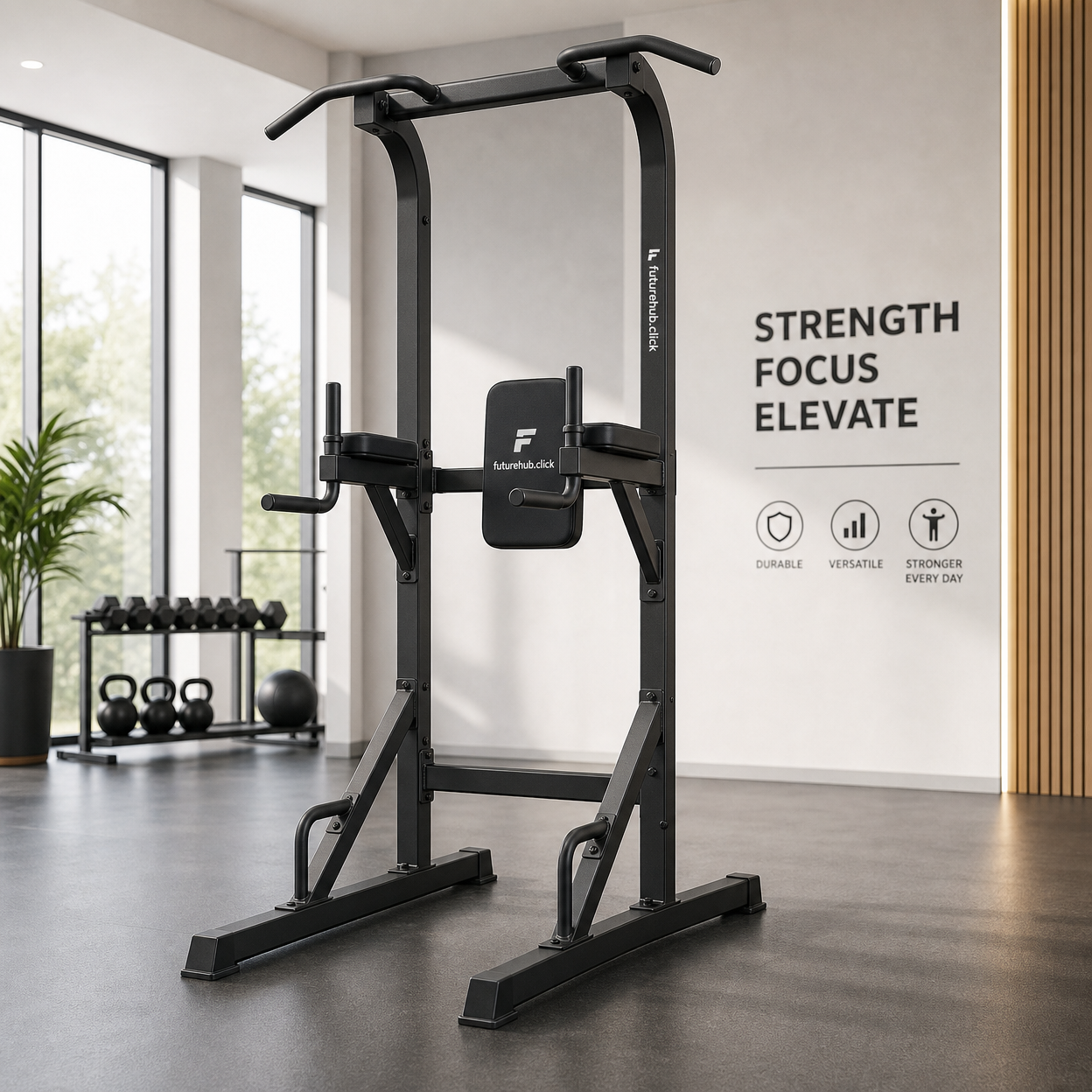
A power tower, also called a chin-up station or multi-function pull-up tower, is a freestanding vertical structure with multiple attachment points and stations for different exercises. A full-featured power tower typically includes a vertical knee raise/leg raise station with padded arm rests and a back support, pull-up and chin-up bars (often at multiple grip widths and positions), push-up handles, and parallel dip bars. Some advanced models also include a cable attachment point, a punching bag anchor, or suspension trainer attachment points. The structure is typically made from heavy-gauge steel with a welded frame for stability and durability.
Key Features to Look for in a Power Tower
When shopping for a power tower, the following features distinguish quality units from inferior alternatives:
Frame Construction: Look for 2×2 inch or 2×3 inch steel tubing with a wall thickness of at least 2mm. Welded joints are significantly stronger than bolted connections. A heavy-duty powder coat finish protects against rust and gives the tower a professional appearance.
Weight Capacity: Quality power towers support 250 to 300 pounds or more. If you are a heavier user or plan to add weighted vests or belts for additional resistance, ensure the capacity exceeds your weighted training weight by a comfortable margin.
Stability: A wide base with floor-level crossbars significantly improves stability during dynamic movements. Rubber feet prevent sliding on hard floors. Some models include the option to bolt the unit to the floor for maximum stability.
Pull-Up Bar Configuration: The best power towers offer multiple grip positions including wide overhand, narrow overhand, parallel neutral grip, and underhand (chin-up) grip positions. Multiple grip options allow you to target different portions of the back and biceps more effectively.
Padding Quality: The arm pad and back support for the vertical knee/leg raise station should be dense and durable, able to withstand years of regular use without compressing or degrading.
Adjustability: Adjustable pull-up bar height and other adjustable elements allow users of different heights to use the tower comfortably.
Essential Exercises on a Power Tower
The power tower’s multi-station design enables an impressive variety of upper body and core exercises:
Pull-Ups and Chin-Ups: The pull-up (overhand grip) and chin-up (underhand grip) are the gold standard of upper body pulling exercises. They develop the latissimus dorsi, biceps, brachialis, rear deltoids, and core simultaneously. Variations include wide-grip pull-ups (emphasizing the outer lats), close-grip pull-ups, neutral-grip pull-ups, commando pull-ups, and archer pull-ups.
Dips: Parallel bar dips target the chest, triceps, and anterior deltoids in a pushing motion that mirrors the effectiveness of the bench press for many users. A slight forward lean during dips shifts more emphasis to the chest, while staying upright targets the triceps more directly.
Vertical Knee Raises and Leg Raises: Using the arm support station, knee raises (bringing bent knees up toward the chest) and straight-leg raises (lifting straight legs parallel to the floor or beyond) are among the most effective abdominal exercises available. L-sit holds on the parallel bars add an isometric core challenge.
Push-Ups: Most power towers include push-up handles at the base, elevating the hands slightly for a greater range of motion than floor push-ups. Wide-grip and narrow-grip push-up handle positions target different muscle groups.
Body Weight Rows (with Suspension Trainer): If your power tower includes a suspension trainer attachment point, inverted rows using rings or TRX-style straps provide a horizontal pulling movement that complements the vertical pull of pull-ups.
Building a Complete Bodyweight Training Program
One of the most compelling features of the power tower is its ability to support a complete upper body training program using only bodyweight:
Sample Upper Body Bodyweight Program (3 days per week):
Push Day: Dips 4 sets, Push-Ups 3 sets, Diamond Push-Ups 3 sets
Pull Day: Pull-Ups 4 sets, Chin-Ups 3 sets, Neutral Grip Pull-Ups 3 sets
Core Day: Knee Raises 4 sets, Leg Raises 3 sets, L-Sit holds 3 sets
For beginner users who cannot yet perform a full pull-up or dip, assisted variations using resistance bands looped around the bar make it possible to train these movements and build strength progressively toward unassisted reps.
Progressive Overload with Bodyweight Training
Many people assume that bodyweight training has an inherent ceiling on progressive overload, but this is a misconception. There are several powerful strategies for continuing to progress with power tower training:
Volume Progression: Gradually increase the total number of reps and sets per session.
Leverage Progressions: Advance to more mechanically challenging variations (from bent-knee to straight-leg raises, from assisted to unassisted pull-ups, from standard to weighted dips).
Weighted Progressions: Add a weight belt with plates or a weighted vest to increase the load on all exercises simultaneously.
Tempo Manipulation: Slow down the eccentric (lowering) phase of each movement to increase time under tension and muscle activation.
Isometric Progressions: Add pauses at the bottom or top of movements to increase difficulty and develop strength at specific joint angles.
Power Tower Compared to Other Home Gym Equipment
How does a power tower compare to other home gym options?
vs Pull-Up Bar Only: A power tower provides everything a pull-up bar does plus dip bars, an ab station, and more. For users who want more than just pull-ups, the power tower is clearly superior.
vs Smith Machine or Cable Station: Power towers cannot replicate the loading capacity or exercise variety of machine-based systems, but they are dramatically less expensive and space-efficient. For users focused on bodyweight strength development, a power tower is often the better choice.
vs Rings or Suspension Trainers: Gymnastics rings and suspension trainers are excellent complements to a power tower rather than competitors. Rings hung from the pull-up bar of a power tower dramatically expand the available exercise library.
Space Requirements and Assembly
A typical power tower measures approximately 52 to 60 inches wide and 52 to 60 inches deep with a height of 88 to 92 inches. Ensure you have sufficient ceiling clearance (at least 96 inches ideally) to perform pull-ups comfortably without hitting the ceiling at the top of the movement. Assembly typically requires two people and 60 to 90 minutes using the included hardware and instructions.
Maintenance
Power towers require minimal maintenance. Periodically check all bolts and fasteners and tighten any that have become loose with use. Wipe down the padding and frame regularly to remove sweat, which can degrade materials over time. If you notice any squeaking or instability, inspect the frame for loose connections before continuing training.
Final Thoughts
A power tower pull up station is one of the best investments you can make for home bodyweight training. By consolidating pull-ups, chin-ups, dips, and core work into a single stable structure, it gives you everything you need to build impressive upper body strength and muscularity without a gym membership or expensive equipment. With consistent training and progressive overload, the power tower is capable of developing elite-level bodyweight strength. Whether you are a beginner just starting your fitness journey or an advanced athlete looking to complement your strength training with intensive bodyweight work, a quality power tower will serve you well for many years.
