Post
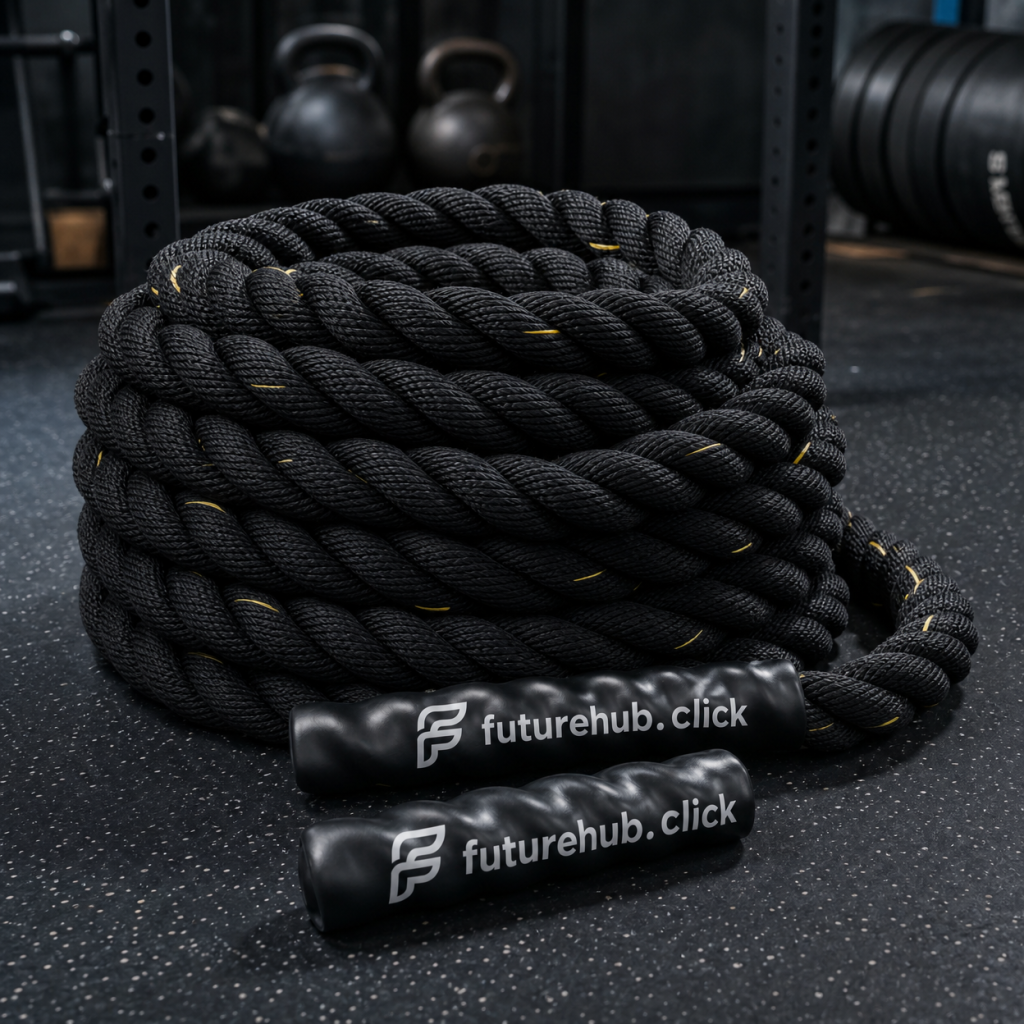
Battle Rope 15m 50mm
May
Battle ropes have become one of the defining training tools of modern functional fitness. These heavy, thick ropes, when anchored at one end and wielded vigorously at the other, create a uniquely demanding training stimulus that simultaneously builds upper body strength, core stability, cardiovascular endurance, and anaerobic power in a single exercise session.
**Understanding Battle Rope Specifications**
The specifications of a battle rope — its length, diameter, and material — fundamentally determine the type of training demand it creates. A 15-meter rope at 50mm diameter represents the high end of the standard market range and is the preferred choice for serious athletic training.
Length affects the wave dynamics of the rope. A longer rope creates waves that travel further before returning, giving you more time to generate the next wave and slightly reducing the demand for continuous maximal power output. A 15-meter rope provides an excellent balance between training challenge and manageable length for most spaces.
Diameter is where the 50mm specification becomes particularly significant. Thicker ropes are dramatically heavier and harder to grip during fatiguing sets. A 50mm rope requires the hands, forearms, and grip to work extremely hard throughout every exercise, building forearm and grip strength as a natural byproduct of every session. The increased mass also creates greater resistance when generating waves and performing power-based movements.
Battle ropes are typically made from polydacron, manila, or nylon. Polydacron and nylon ropes are weather-resistant and maintain their structure better over time, making them preferable for training in outdoor or humid environments. Manila ropes have a natural fiber texture that some athletes prefer for grip, though they are more susceptible to deterioration from moisture.
**The Unique Training Stimulus**
What makes battle rope training distinctive is that it creates both upper body and cardiovascular demands simultaneously, at a level that few other exercises can match. During alternating wave exercises — the most fundamental battle rope movement — both arms must continuously generate force at high velocity, creating powerful upper body fatigue while the cardiovascular system works at near-maximal intensity to support the aerobic and anaerobic energy demands.
Within two to four minutes of continuous battle rope work, most athletes reach near-maximal heart rates and are working at or above their lactate threshold. This combination of strength and cardiovascular demand makes battle rope training an extraordinarily time-efficient approach to conditioning.
**Core Exercises and Progressions**
The alternating waves are the foundation of battle rope training: stand facing the anchor point, hold one rope in each hand, and alternate raising and lowering each arm in a rhythmic wave pattern. This is the entry point that establishes the basic movement skill and provides an immediate assessment of your conditioning level.
Simultaneous waves, where both arms move together, create longer and more powerful waves that demand greater upper body power and coordination. Slam variations, where both ropes are raised overhead and slammed to the ground explosively, incorporate the entire posterior chain and core in a power-based movement that transfers directly to athletic activities.
Lateral waves, performed by moving both ropes together to one side then the other in a figure-8 or side-to-side pattern, heavily challenge the obliques and create rotational training stimulus. Jumping or squat variations combined with wave patterns add lower body and cardiovascular elements that transform the exercise into a full-body conditioning circuit.
As proficiency develops, the complexity and creativity of battle rope workouts can be expanded enormously. Walking while performing waves, kneeling or half-kneeling variations, rotational throws, lateral shuffles, and agility-based movements all add dimensions to the training challenge.
**Anchor Systems and Space Requirements**
Proper anchoring is essential for safe and effective battle rope training. The anchor point must be capable of withstanding powerful, repetitive pulling forces from multiple directions. Options include wall-mounted anchor plates, heavy-duty anchor straps around a sturdy structural post, or specialized floor anchor systems. The anchor should be positioned at approximately knee to hip height for standard wave training.
A 15-meter rope requires a usable training space of at least 8 to 9 meters from the anchor point to the training position when folded in half. Ceiling height is not typically a concern unless you perform slam or overhead variations, which require approximately 3 meters of vertical clearance. Ensure the floor surface is suitable — rubber matting or concrete is preferable to slippery surfaces.
**Programming Battle Ropes for Different Goals**
For cardiovascular conditioning and fat loss, interval-based protocols are highly effective. Work periods of 20 to 40 seconds at maximal or near-maximal effort, separated by equal or slightly longer rest periods, create the metabolic challenge that drives rapid improvements in aerobic capacity and caloric expenditure.
For power development and athletic performance, shorter, more explosive work sets of 10 to 20 seconds with longer recovery periods allow maximum force production in each bout without the decay in power that accompanies longer work periods.
For muscular endurance and work capacity development in sports that require sustained upper body effort — rowing, wrestling, swimming, climbing — moderate intensity continuous bouts of 60 to 120 seconds develop the specific endurance qualities needed.
**Conclusion**
A 15-meter, 50mm battle rope is a premium training tool that delivers conditioning benefits achievable through few other single pieces of equipment. Its combination of strength, power, endurance, and metabolic challenge makes it indispensable in serious athletic programs. Durable, weather-resistant, and requiring no electricity or maintenance, a quality battle rope represents training value that compounds with every session. Energy Systems: Battle rope training taxes the anaerobic glycolytic energy system for high-intensity efforts. During 40-second sets at maximal intensity muscle glycogen depletes and lactate accumulates. This accumulation signals muscles to adapt. Repeated exposure drives lactate buffering capacity development. Athletes with superior capacity maintain high power output longer. Grip Strength: The forearm muscles face unique challenges. As sets progress maintaining firm grip becomes difficult. This sustained demand creates continuous recruitment of forearm muscles driving substantial strength development. Shoulder Stability: Continuous arm movement places demands on rotator cuff muscles. Unlike heavy pressing that creates compression forces battle rope training creates dynamic stability demands developing the rotator cuff through movement.
