Post
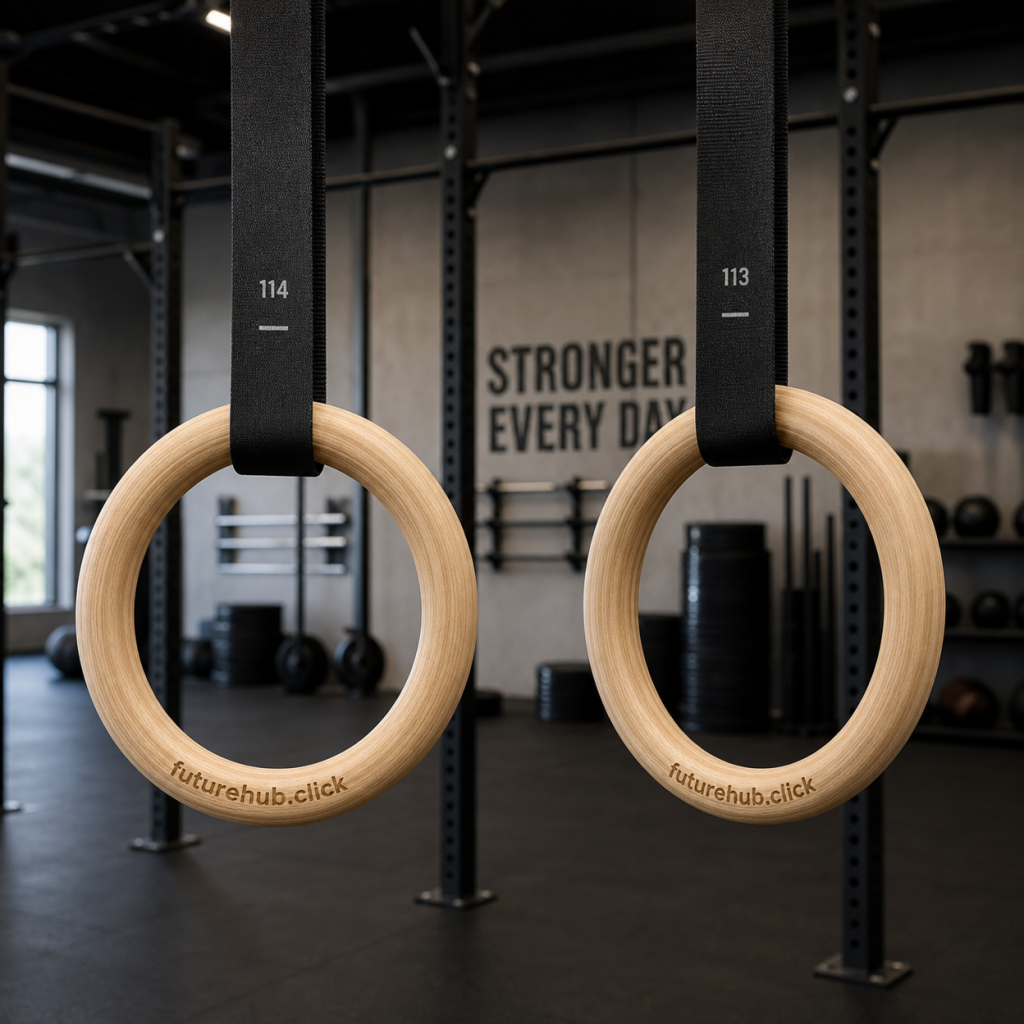
Gymnastics Rings Wooden
May
Gymnastics rings are perhaps the most humbling and rewarding piece of training equipment available. Hanging from an overhead anchor point, these simple circles of wood or plastic introduce an unstable training environment that demands extraordinary strength, stability, and body control. Wooden gymnastics rings, in particular, represent the premium option that serious calisthenics practitioners and gymnastics enthusiasts choose for their superior grip qualities and traditional feel.
**Why Wood Is Superior to Plastic or Metal**
The material choice for gymnastics rings significantly affects the training experience. Plastic rings are the most affordable option but provide a hard, smooth surface that offers limited grip, particularly as hands become sweaty during intense training. Metal rings are rare in training contexts due to their harsh texture and heat conductivity in cold environments.
Wooden rings, typically made from birch, beech, or maple, offer a unique combination of properties that plastic cannot replicate. The natural texture of wood provides excellent grip in both dry and slightly wet conditions, and the wood absorbs minimal moisture from perspiration while maintaining a secure feeling in the hand. The smooth finish of quality wooden rings prevents the skin abrasion that coarser grip surfaces can cause during prolonged training.
Wood also has a slight give that feels more natural and connected than rigid plastic. During high-tension exercises like the iron cross or maltese, where the hands must maintain grip under enormous rotational and linear forces, the slight flex of quality wooden rings creates a more forgiving and secure interface.
**The Instability Advantage**
The fundamental challenge of ring training is instability. Unlike a fixed bar or bench, rings can swing, rotate, and move in any direction. Every exercise performed on rings requires the stabilizing muscles of the shoulder girdle, core, and trunk to work continuously to control the position of the rings and maintain body alignment.
This instability dramatically increases muscle activation in the rotator cuff, serratus anterior, and deep shoulder stabilizers compared to equivalent exercises performed on fixed equipment. Over time, ring training develops exceptional shoulder stability that transfers to injury prevention, improved posture, and enhanced performance in virtually every other upper body movement.
Push-up variations on rings, for example, require the hands to be held in the correct position against the constant tendency of the rings to flare outward. This challenge develops the pectorals, triceps, and anterior deltoids while simultaneously training the rotator cuff and serratus anterior in a functionally integrated way that isolated machine exercises cannot replicate.
**Fundamental Ring Exercises**
The ring support position — arms straight, rings at hip height with body supported above them — is the foundational skill from which all ring training develops. Simply holding the support position for time develops the shoulder stability and body tension required for more advanced movements and is often more challenging than it appears for beginners.
Ring dips develop tremendous tricep, chest, and anterior deltoid strength. The instability of the rings means you cannot simply push through momentum or rely on the fixed bar trajectory to guide your movement; every inch of the movement is entirely controlled by muscular effort.
Ring rows and ring pull-ups, performed with rings set higher and the body hanging below them, target the back, biceps, and rear deltoids. The rings allow your hands to rotate naturally throughout the movement, which many athletes find more comfortable than fixed-bar pulling movements.
Muscle-ups — transitioning from a hanging position below the rings to a support position above them in a single fluid movement — are the crown jewel of intermediate ring training. They require tremendous pulling strength, explosive power, and precise timing of the transition through the rings.
**Setting Up Rings Safely**
Ring height and anchor security are the primary safety considerations. Rings should be suspended from an anchor capable of supporting at least twice your bodyweight to account for dynamic loading during explosive movements. Ceiling joists, dedicated pull-up frames, squat rack uprights, and purpose-built outdoor ring frames are all viable anchor options.
Strap length is adjusted to position the ring at the appropriate height for each exercise. For support and dip work, rings at approximately hip height when standing allows you to jump to the support position without requiring a box. For pulling exercises, ring at approximately shoulder height or above, with feet on the floor for initial ring row progressions, creates accessible starting points.
**Maintenance and Care**
Wooden ring develop a patina with use as natural oils from the hands condition the wood surface. This is desirable and enhances grip over time. Periodically sanding the ring with fine-grit sandpaper and applying a thin coat of raw linseed oil restores the surface and prevents the wood from becoming too dry and brittle.
Inspect the straps and metal hardware before each training session. Replace any strap showing fraying, cuts, or significant wear, and ensure all buckles and clips are functioning correctly and fully secured before loading the ring.
**Conclusion**
Wooden gymnastics ring are a timeless training tool that demands and develops a quality of strength and body control that no machine can replicate. Their portability, minimal space requirements, and extraordinary exercise variety make them one of the highest-value investments in human performance training. Anyone serious about building functional, athletic, and impressive upper body strength should consider ring an essential component of their training equipment. Progressive Training: Advancing on ring follows a specific progression based on body tension development. Beginners should focus on support position hold progressively increasing duration. After establishing holds practitioners progress to rows. Once quality rows are achieved dip training becomes accessible. Muscle Memory: Motor skills learned through ring training demonstrate remarkable retention. Athletes who train consistently develop neural pathways that encode skills deeply. Even after months without training practitioners return to previous levels faster. Ring Training and Proprioception: Beyond strength ring training develops proprioceptive awareness to extraordinary levels. The constant instability demands continuous sensing and adjustment.
