Post
Ab Roller Wheel
May
Ab Roller Wheel: The Complete Guide to One of Fitness’s Most Effective Core Tools
Few pieces of fitness equipment generate as much attention for their results-to-cost ratio as the ab roller wheel. Simple in design but challenging in execution, the ab roller is one of the most effective core training tools ever created, offering a level of abdominal activation and anti-extension core strength development that crunches, sit-ups, and many machine exercises simply cannot match. Whether you are a beginner building your first core strength foundation or an advanced athlete pushing toward gymnastics-level strength, understanding how to use the ab roller correctly and progressively will transform your core training.
What Is an Ab Roller Wheel?
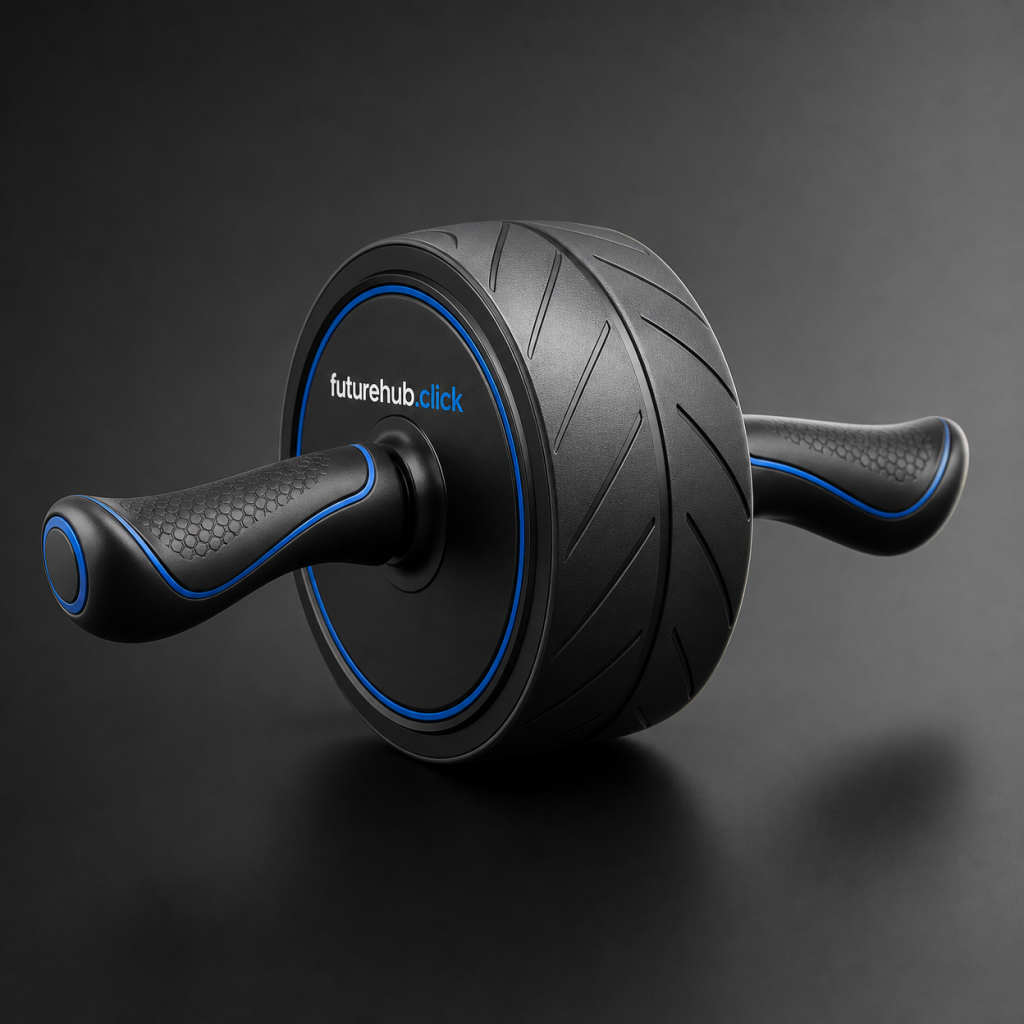
An ab roller wheel, also called an ab wheel or exercise wheel, is a simple device consisting of a wheel (or dual wheels side by side) with a handle that runs through the center, allowing the wheel to roll along the floor while the user grips the handles. The user begins in a kneeling or standing position, rolls the wheel forward until the body is nearly horizontal, then reverses direction by contracting the core muscles to return to the starting position. This movement requires the core to resist spinal extension throughout the full range of motion, creating an anti-extension challenge that is uniquely demanding compared to most conventional core exercises.
The Science of Anti-Extension Core Training
Most people think of core training primarily in terms of flexion exercises — sit-ups, crunches, and leg raises that bring the torso or legs toward each other. While these exercises develop some aspects of core strength, modern exercise science recognizes anti-extension strength — the ability to resist unwanted spinal extension — as equally or more important for both performance and injury prevention.
Anti-extension strength is what allows the spine to remain neutral during deadlifts, squats, and overhead pressing. It is what prevents the lower back from arching excessively during push-ups and planks. And it is a primary determinant of lower back health and pain prevention. The ab roller creates one of the most intense anti-extension demands of any exercise, making it an exceptionally valuable tool for developing functional core strength.
Electromyography (EMG) studies comparing ab wheel rollouts to traditional exercises have consistently found that the ab wheel produces higher levels of muscle activation in the rectus abdominis and obliques than virtually any standard floor exercise, including crunches and leg raises.
Proper Form and Technique
Mastering the ab roller requires learning correct technique before attempting challenging progressions. Here is a step-by-step guide to proper kneeling ab rollout form:
Starting Position: Kneel on a mat with the ab roller placed directly below the shoulders. Grip the handles firmly with both hands, arms fully extended. The back should be flat with a slight natural curve (neutral spine) rather than rounded or excessively arched. Brace the core firmly as if expecting a punch.
The Roll-Out: Slowly roll the wheel forward by extending the hips and reaching the arms overhead. Keep the core braced throughout — you should feel strong tension in the abdominals from the moment the movement begins. The arms should remain straight, with movement coming from the hips rather than the elbows.
Range of Motion: For beginners, roll out only to the point where you can maintain a rigid, neutral spine position. Rolling further than you can control will cause the lower back to sag, which shifts stress from the abs to the spine and increases injury risk. As strength develops, gradually increase the range of motion.
The Return: Reverse the movement by contracting the core and pulling the wheel back toward the knees. Resist the temptation to use momentum or hip flexor strength to return — the pulling motion should come primarily from abdominal contraction.
Finish Position: Return to the starting position with arms extended and spine neutral. Reset and repeat.
Progressive Progressions for All Levels
The ab roller is scalable across a wide range of fitness levels through intelligent progressions:
Beginner Level: Start with wall-limited rollouts where a wall set 2 to 3 feet in front stops the wheel at a manageable range. This allows practice of the bracing and rolling mechanics without risk of collapse. Perform 3 sets of 5 to 8 controlled reps.
Intermediate Level: Kneeling rollouts to a full 90-degree torso-floor angle. At this range, the abdominals experience significant loading throughout the movement. Perform 3 to 4 sets of 8 to 12 reps.
Advanced Level: Full kneeling rollouts until the body is parallel to or nearly parallel to the floor. This requires exceptional core anti-extension strength. Perform 3 to 4 sets of 8 to 12 reps.
Elite Level: Standing ab wheel rollouts from a standing position are one of the most challenging core exercises in existence, requiring extraordinary core strength to prevent spinal collapse throughout the extended range. Few people can perform these with perfect form.
Additional Ab Roller Exercises
While the rollout is the primary ab wheel exercise, several other movements use this simple tool effectively:
Lateral Rollouts: Roll the wheel diagonally to the left or right rather than straight ahead. This adds an oblique anti-lateral flexion component to the rollout.
Pike Rollout: Start in a push-up position with feet on the ground and roll the wheel forward before rolling back and piking the hips up toward the ceiling. This combines the rollout with a pike movement for a different challenge.
Wheel Push-Ups: Perform push-ups using the ab wheel handles for an unstable base that challenges shoulder stability and core engagement simultaneously.
Seated Rollout: Sitting on the floor, extend the wheel away from the body and back. Lower loads than standing or kneeling rollouts, this is a good starting point for very beginners.
Common Mistakes to Avoid
Sagging Lower Back: The most common error, and the most dangerous. If the lower back dips toward the floor during rollout, reduce the range of motion immediately. Lower back sagging indicates the core is not strong enough to support that range, and continuing with poor position places dangerous compressive forces on the lumbar spine.
Using Hip Flexors to Pull Back: Many beginners use a hip-flexion movement (closing the hips) rather than abdominal contraction to return to the start position. Consciously focus on pulling with the abs during the return phase.
Holding Breath: Maintain steady breathing throughout the movement. Exhale during the pull-back phase and inhale during the roll-out phase.
Going Too Fast: Speed reduces the difficulty of the exercise and increases injury risk. Perform each rep with deliberate control, especially at full extension.
Integrating Ab Roller Training into Your Program
Ab roller training is best performed 2 to 4 times per week. Because it is a demanding core exercise, allow adequate recovery between sessions. A simple integration looks like this: perform 3 to 5 sets of ab rollouts at the appropriate difficulty level at the beginning of your core training block, followed by complementary exercises targeting rotation (Russian twists) and anti-lateral flexion (suitcase carries, pallof press) for comprehensive core development.
Final Thoughts
The ab roller wheel is a remarkably effective, affordable, and compact core training tool that deserves a place in any serious training program. Its unique anti-extension training stimulus develops functional core strength that transfers to virtually every athletic and daily movement. By progressing intelligently from beginner to advanced variations and maintaining strict form throughout, the ab roller can build elite-level core strength over time. Few tools deliver so much training value at such a low cost and with such minimal space requirements.
