Post
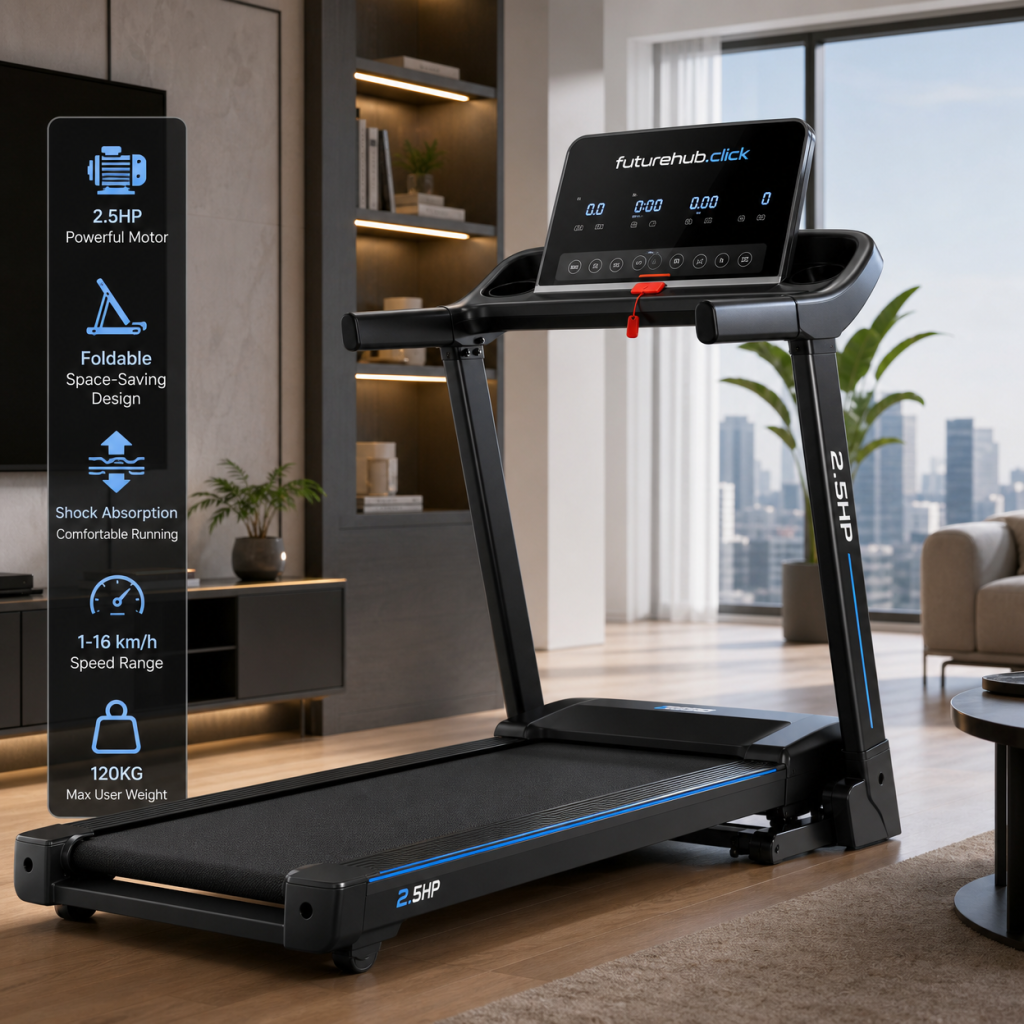
Folding Treadmill 2.5HP
May
Folding Treadmill 2.5HP: Everything You Need to Know for Smart Home Cardio
The treadmill remains the most popular piece of cardio equipment in the world, and for good reason. Walking and running are among the most natural human movements, and having the ability to perform these movements indoors on demand — regardless of weather, time of day, or safety considerations — is enormously valuable for consistent fitness progress. The folding treadmill with a 2.5HP motor represents a sweet spot in the home treadmill market, offering meaningful performance capability in a space-efficient design that can fold away when not in use. This comprehensive guide covers everything you need to know about folding treadmills with 2.5HP motors.
Understanding Treadmill Motor Specifications
The motor is the most critical component of a treadmill, and understanding how to interpret horsepower (HP) ratings is essential for making an informed purchase decision. Treadmills typically report motor power in two ways:
Peak Duty HP: The maximum horsepower the motor can produce for brief periods. This number tends to be higher and is often used in marketing materials.
Continuous Duty HP: The horsepower the motor can sustain consistently throughout a workout. This is the more meaningful specification.
For a 2.5HP motor treadmill, the rating typically refers to peak duty. The continuous duty rating is generally 1.75 to 2.0HP for a 2.5 peak duty unit. This is generally adequate for walking and light jogging for users up to approximately 100kg, but may work harder and run hotter for heavier users or during sustained high-speed running intervals.
For regular walking and occasional jogging, a 2.5HP peak (approximately 2.0 continuous) motor provides adequate performance. For frequent high-intensity running or heavier users, a motor rated 3.0 to 4.0 CHP provides better long-term reliability.
Folding Design Benefits and Considerations
The defining feature of a folding treadmill is its ability to raise the running deck vertically when not in use, dramatically reducing the floor space the unit occupies. Here is what to know about folding treadmill design:
Space Savings: When folded, most folding treadmills occupy roughly 50 to 60 percent less floor space than their deployed dimensions. A typical unit might measure 170 to 180cm when deployed (with running deck horizontal) and 90 to 100cm when folded. This space savings is transformative for apartment dwellers and home gym users with limited dedicated space.
Hydraulic Folding Assist: Higher-quality folding treadmills incorporate hydraulic shocks that make folding and unfolding smooth and controlled, preventing the deck from dropping suddenly. This feature is worth specifically looking for when evaluating models.
Stability When Deployed: A common concern with folding treadmills is whether they feel as stable as non-folding alternatives. Quality folding treadmills use robust locking mechanisms that secure the deck firmly in the horizontal position. Test the unit before purchase if possible, or read user reviews specifically addressing stability during use.
Rolling Wheels: Most folding treadmills include small wheels on the base of the unit, allowing you to tip and roll the folded treadmill to a different location. This portability feature is convenient but should not be expected to make heavy treadmills easy to move — most still weigh 50 to 80kg.
Key Features to Look for in a 2.5HP Folding Treadmill
Running Surface (Belt Size): The running belt should be at minimum 40cm wide and 120cm long for comfortable walking. For jogging and running, a 45cm x 130cm or larger belt provides better comfort and safety. Wider belts with longer decks are always preferable.
Speed Range: Most folding treadmills in this category offer a speed range of 1 to 14 or 16 km/h. This covers a comfortable walking pace through a moderate running pace, suitable for most fitness goals.
Incline Capability: The ability to elevate the running deck adds cardiovascular intensity to walking and jogging without increasing speed. Manual incline treadmills require stopping to adjust the deck height, while motorized incline models allow changes during exercise. Even a 6 to 12% incline capability significantly expands the training possibilities of the unit.
Cushioning System: Treadmill cushioning reduces the impact forces transmitted to the joints during running compared to outdoor surfaces. Higher-quality folding treadmills feature multi-point cushioning systems with varying densities along the belt length. Good cushioning is particularly important for runners with knee or hip concerns.
Console and Display: The console should display time, speed, distance, calories (estimated), and heart rate (if compatible sensors are included). A clear, easily readable display is important during workouts when you do not want to strain to read small text.
Safety Features: A safety key or magnetic safety tether that automatically stops the treadmill if the user falls or steps off the rear is an essential safety feature that should not be overlooked.
Effective Treadmill Training Approaches
A 2.5HP folding treadmill supports several effective training approaches:
Steady-State Walking: Daily 30 to 60 minute walks at a brisk pace (5 to 6 km/h) are among the most research-supported activities for cardiovascular health, weight management, and longevity. Walking at an incline of 5 to 10% intensifies this training significantly.
Interval Training: Alternating between higher-intensity running or incline walking and lower-intensity recovery periods provides exceptional cardiovascular conditioning and metabolic benefits. A simple protocol: 1 minute at a challenging pace or incline, 1 minute at easy walking pace, repeated for 20 to 30 minutes.
Zone 2 Training: Extended periods (45 to 90 minutes) of moderate-intensity exercise in the zone 2 heart rate range (approximately 60 to 70% of maximum heart rate) are increasingly recognized as highly effective for developing aerobic base fitness and mitochondrial density.
Virtual Running: Many modern treadmills connect to apps like Zwift, Peloton, or iFit that provide virtual environments, pre-programmed workouts, and coaching, transforming routine treadmill sessions into engaging, structured experiences.
Maintenance
Regular maintenance extends treadmill lifespan significantly. The running belt requires lubrication every 3 to 6 months (depending on use frequency) with silicone-based treadmill lubricant. Keep the area around the motor housing clean and dust-free. Regularly check for unusual noises or belt tracking issues (the belt drifting to one side) and adjust the rear roller tension accordingly.
Final Thoughts
The folding treadmill with a 2.5HP motor offers a practical and effective solution for home cardio training. By combining meaningful performance capability with space-efficient folding design, it makes consistent indoor walking and jogging accessible regardless of home size or outdoor conditions. Choose a model with adequate belt size, quality cushioning, and the features most important to your training goals, and you will have a reliable cardio companion for years of effective home fitness training.
