Post
Adjustable Weight Bench
May
 When it comes to building a functional home gym, few pieces of equipment are as versatile and essential as an adjustable weight bench. Whether you are a beginner just starting your fitness journey or a seasoned athlete fine-tuning your physique, an adjustable weight bench provides the foundation for hundreds of exercises targeting every major muscle group in your body.
 When it comes to building a functional home gym, few pieces of equipment are as versatile and essential as an
 **What Is an Adjustable Weight Bench?**
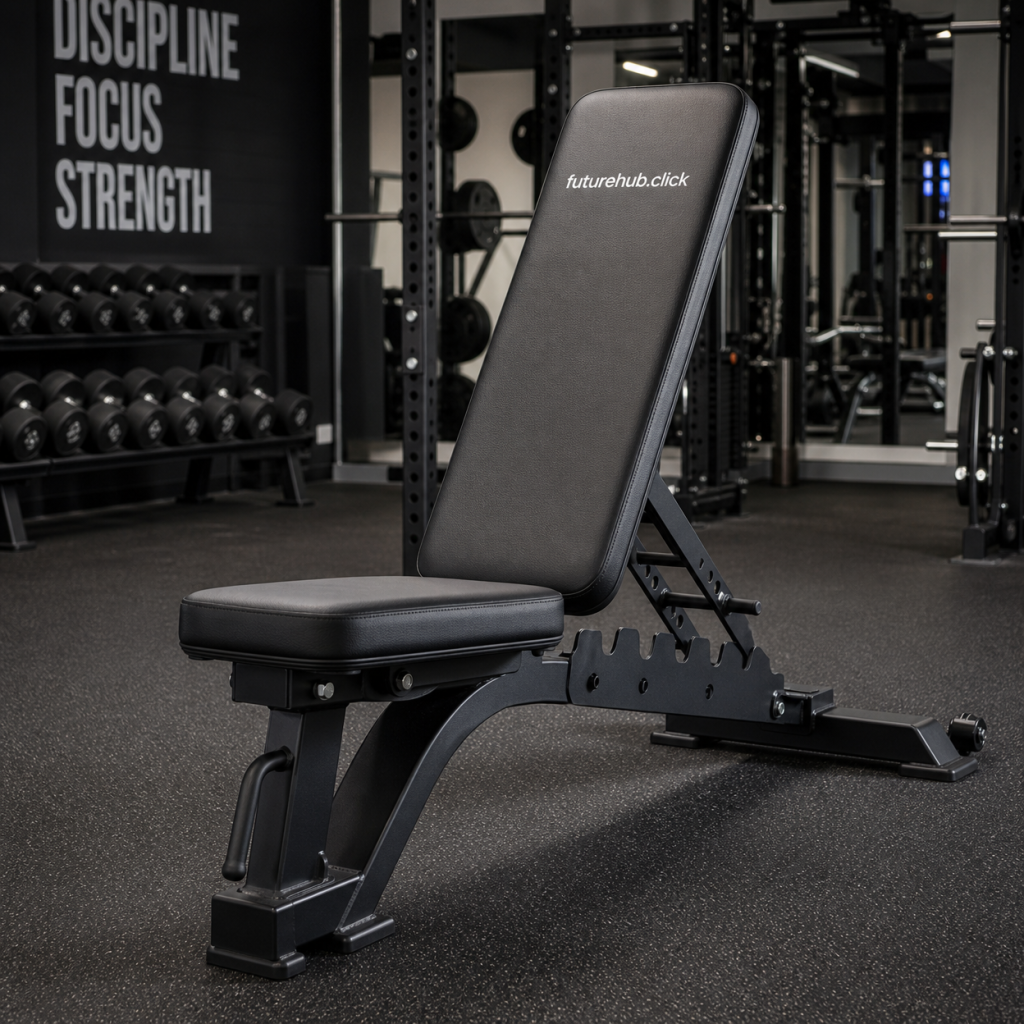
An adjustable weight bench is a padded, elevated platform designed to support your body during strength training exercises. Unlike flat benches, an adjustable model allows you to change the angle of the backrest, typically from a flat position to various incline angles and sometimes a decline position. This adjustability is what makes it such a powerful tool — with a single piece of equipment, you can perform flat bench presses, incline presses, decline presses, shoulder presses, seated curls, tricep extensions, and much more.
Modern adjustable benches typically offer multiple backrest positions, ranging from a decline of about -20 degrees to a full upright 90-degree position. High-quality models will also allow you to adjust the seat pad independently, which prevents your body from sliding during incline movements and ensures proper spinal alignment throughout each exercise.
**Key Features to Look For**
When shopping for an adjustable weight bench, several features determine quality and usability. The weight capacity is perhaps the most critical specification. A well-built bench should support at least 300 kilograms when accounting for both the user’s body weight and the load being lifted. Cheaper models may claim high limits but use inferior steel that bends or wobbles under pressure, which poses a serious safety risk.
The padding quality directly impacts comfort during long training sessions. High-density foam covered in durable, sweat-resistant vinyl is the standard for quality benches. Thin padding becomes uncomfortable quickly and may bottom out, causing pressure points that distract from your workout.
Stability is another non-negotiable feature. A good bench should not wobble or shift during explosive movements. Look for models with wide, rubber-footed legs that grip the floor firmly. The frame should be made from heavy-gauge steel with welded joints rather than bolted connections that loosen over time.
The number of adjustment positions matters significantly. Entry-level benches may offer only three or four positions, while premium models provide seven or more distinct angles. More positions allow you to make finer adjustments that target specific portions of muscle fibers more precisely.
**Benefits of Training with an Adjustable Weight Bench**
The incline angle of a bench press profoundly affects which muscle fibers are recruited. A flat bench press emphasizes the mid-chest, while an incline press shifts focus to the upper chest and anterior deltoids. Decline presses target the lower chest. Without the ability to adjust angles, you are leaving a significant portion of your chest development untrained.
Beyond the chest, an adjustable bench opens up an enormous range of upper body exercises. Seated dumbbell shoulder presses become possible when the bench is set to 90 degrees. Incline dumbbell curls, performed at roughly a 45-degree angle, stretch the biceps at the bottom of the movement and create superior muscle activation compared to standing curls. Lying tricep extensions, skull crushers, and pullovers all become accessible with a stable, padded surface.
The bench is also incredibly useful for core and lower body work. Elevated split squats, also known as Bulgarian split squats, place the rear foot on the bench to increase the range of motion and intensity of the exercise. Step-ups using the bench as a platform challenge leg strength and cardiovascular endurance simultaneously.
**Setting Up Your Adjustable Weight Bench**
Positioning your bench correctly in your training space is important for both safety and effectiveness. Ensure you have adequate space on all sides to move freely, especially if you are pressing with dumbbells that need to be swung into position. A minimum clearance of one meter on each side is recommended.
If you are pressing heavy weights, always have a spotter present or use a power rack with safety bars. Even the most experienced lifters occasionally misjudge their strength on a given day, and the consequences of a failed lift without protection can be severe.
Maintain the bench regularly by checking all bolts and adjustment mechanisms every few months. Tighten any loose hardware, wipe down the upholstery after each use to prevent sweat damage, and store the bench in a dry location to prevent rust on the steel frame.
**Conclusion**
An adjustable weight bench is one of the highest-return investments you can make in your home gym. Its versatility means it never becomes obsolete, adapting to every stage of your fitness development. From beginner bodyweight exercises to advanced powerlifting movements, a quality adjustable bench will serve you reliably for years. Choose one with solid construction, ample padding, multiple adjustment positions, and a high weight capacity, and you will have the cornerstone of a truly comprehensive home training setup. Advanced Chest Development: The ability to adjust an incline bench to multiple angles creates opportunities for comprehensive chest development. Research demonstrates that upper pectoralis fibers are preferentially activated at incline angles between 30 to 45 degrees, creating the rounded, full appearance that distinguishes an impressive chest from a flat underdeveloped one. The mid-chest comprises the majority of chest mass and is maximized at flat angles between 0 to 15 degrees. The lower chest receives optimal stimulus from decline angles of -15 to -20 degrees. Without the ability to manipulate these angles, your chest will inevitably develop asymmetrically with overdeveloped areas and noticeable gaps. Modern sports science has revealed that each portion of the chest has distinct neural patterns and fiber recruitment strategies. When performing an incline bench press, your nervous system activates a specific combination of motor units that differs from flat bench press. Over months and years of training, these repeated neural patterns create neural pathways that become more efficient at producing force at those specific angles. This principle known as specificity of training means that diversifying your bench angles through multiple positions is not optional for optimal development. Independent Seat Pad Adjustment: Many budget benches offer backrest adjustment but fail to provide independent seat pad adjustment. This limitation means that as you lean back at an incline, your body slides down the seat, causing your lower back to arch excessively and your pelvis to tilt forward. This misalignment reduces the mechanical efficiency of the pressing motion and increases stress on the lumbar spine, contributing to chronic back pain over time. A truly quality adjustable bench allows you to adjust the seat pad independently, maintaining proper pelvic position and spinal alignment regardless of the backrest angle selected. This seemingly small feature is actually crucial for long-term joint health and training longevity. Integration with Cable Systems: The most versatile home gym setups combine an adjustable weight bench with cable machines. Seated cable exercises performed on an adjustable bench allow you to adjust the angle to target specific portions of muscles. Seated cable flyes performed at an incline create exceptional upper chest activation due to the changed line of resistance. Seated cable rows at various angles develop the back comprehensively. Progressive Training Programs: The most effective long-term training programs use bench angle manipulation as a primary progressive overload variable. In week one you might focus on flat bench pressing for 4 sets of 6-8 repetitions with maximum load. In week two you shift to an incline angle and reduce load slightly while maintaining the same number of repetitions, requiring your nervous system to adapt to new angles. By week four you return to flat bench with a heavier load than week one, demonstrating that angle variation actually enhanced overall strength development through neural adaptation. Research shows that athletes who vary their training angles demonstrate superior strength gains and muscle development compared to those who stick with single-angle training.
