Post
Utilmate Pull Up Assist Bands
May
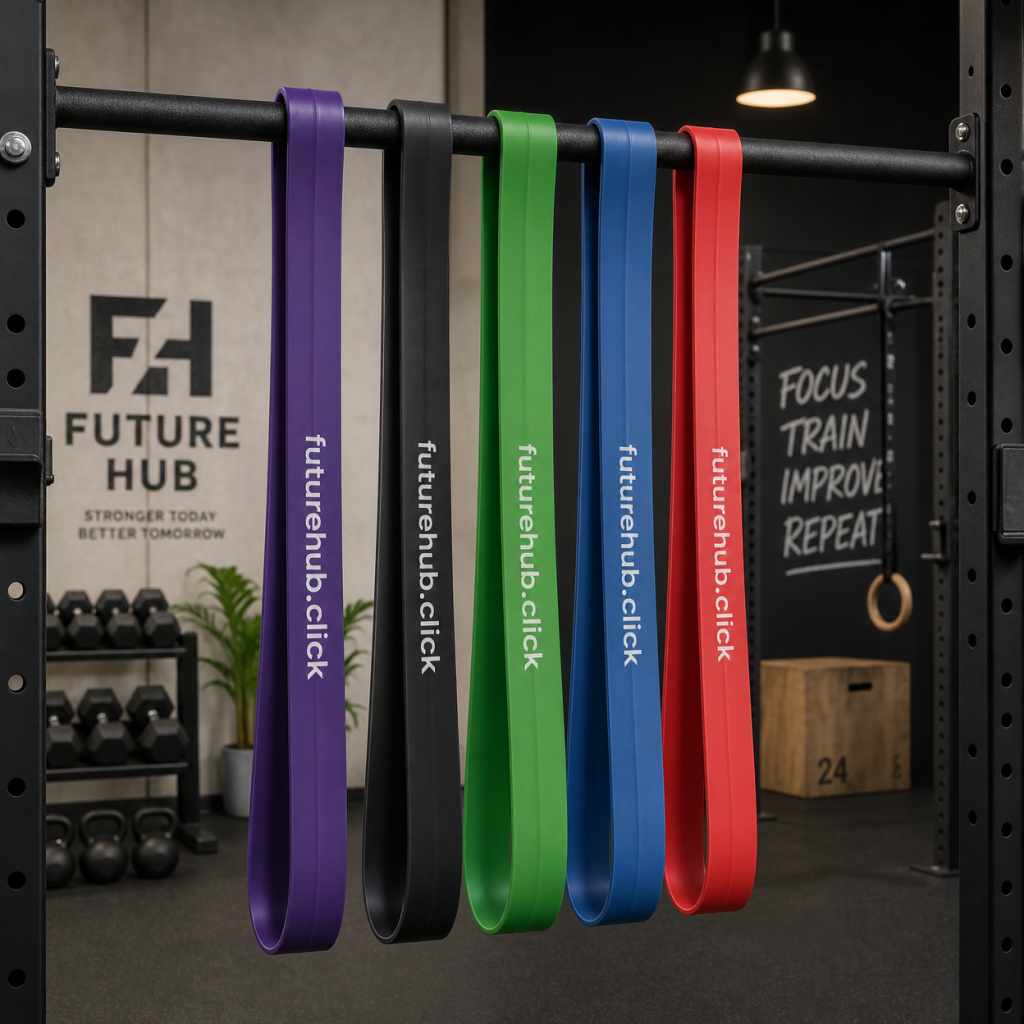
 The pull-up is widely considered one of the most effective upper body exercises in existence. It builds width and thickness in the back, develops powerful biceps and forearms, and teaches total body tension that transfers to virtually every other athletic movement. Yet for many people, it is also one of the most frustratingly inaccessible exercises. This is where pull-up assist bands transform the training landscape.
 The pull-up is widely considered one of the most effective upper body exercises in existence. It builds width and thickness in the back, develops powerful biceps and forearms, and teaches total body tension that transfers to virtually every other athletic movement. Yet for many people, it is also one of the most frustratingly inaccessible exercises. This is where pull-up assist
 **What Are Pull Up Assist Bands?**
Pull-up assist bands, also called resistance bands or loop bands, are thick elastic bands made from natural latex rubber. They come in various thicknesses and resistance levels, with lighter bands providing minimal assistance and heavier bands offering substantial help to those just beginning their pull-up training.
The mechanism is elegantly simple. You loop the band around your pull-up bar, then place your knee or foot inside the lower loop. As you begin pulling upward, the band stretches and provides an upward elastic force that reduces the effective bodyweight you need to lift. A heavy assist band might reduce the perceived load by 30 to 50 kilograms, while a light band might provide just 5 to 10 kilograms of assistance, allowing near-independent performance.
**The Progressive Overload Principle Applied**
One of the most powerful aspects of training with assist bands is how naturally they facilitate progressive overload. As your strength increases, you can use a progressively lighter band until you no longer need any assistance. This seamless progression makes assist bands superior to many other pull-up assistance methods, such as machine-assisted pull-up stations, because they maintain the full-body tension and engagement of the real movement.
Machine-assisted pull-ups use a counterweight that changes the mechanics of the exercise in ways that do not fully transfer to unassisted performance. Assist bands preserve the exact movement pattern of the real pull-up while simply reducing the load, so every repetition trains the neurological patterns and muscle fiber recruitment that directly carry over to independent pull-ups.
**Building to Your First Unassisted Pull-Up**
For complete beginners unable to perform a single unassisted pull-up, the journey typically begins with the heaviest available band. Focus on mastering the full range of motion from complete arm extension at the bottom to chin clearing the bar at the top. Quality repetitions with full range of motion develop more strength than partial reps performed just to complete the movement.
As you achieve consistent sets of 8 to 10 repetitions with the heaviest band, move to a medium-resistance band. Expect a temporary reduction in your repetition count, which is normal and expected. Continue building to 8 to 10 quality reps before moving to a lighter band, continuing this progression until you are performing your first unassisted repetitions.
Supplement your banded pull-up training with eccentric-focused work. Jumping to the top position and then lowering yourself as slowly as possible for 5 to 8 seconds creates enormous strength gains in the muscles responsible for the pull-up. The eccentric phase is where the most mechanical stress occurs, and dedicated eccentric training accelerates strength development significantly.
**Exercise Variety Beyond Pull-Ups**
Pull-up assist bands are remarkably versatile and can be used for a wide range of exercises beyond their primary application. The same bands that assist pull-ups can be used for tricep pushdowns, face pulls, banded push-ups, chest flyes, hip resistance work, shoulder external rotation exercises, and stretching routines.
For pull-up bar training specifically, bands allow you to cycle through pull-up variations that develop different portions of the back and arms. Wide-grip pull-ups target the outer lats, creating that coveted V-taper. Close-grip supinated chin-ups place greater emphasis on the biceps and lower lats. Neutral-grip pull-ups are easier on the shoulder joints and still build excellent back width. Being able to perform all of these movements with band assistance at various strength levels means your programming can remain varied and interesting throughout the entire developmental process.
**Choosing the Right Band Set**
A complete set of assist bands typically includes four to five bands of varying resistance. Having multiple bands allows you to find the exact assistance level on any given training day, accounting for fatigue, and allows you to use bands in combination when maximum assistance is needed for new movements.
When selecting band, prioritize quality latex construction that has been layered and reinforced rather than simple molded band. Look for flat band rather than tubing, as flat resistance band distribute load more evenly across the band cross-section and are less likely to snap under repeated loading. Inspect band before each use for any nicks, cuts, or areas of discoloration that indicate material fatigue, and replace any band showing signs of wear immediately.
**Conclusion**
Pull-up assist band democratize one of the greatest upper body exercises, making it accessible to anyone regardless of their current strength level. They are affordable, durable, portable, and effective across a wide range of applications. Whether you are working toward your first unassisted pull-up or using them to add volume to an already advanced training program, pull-up assist band belong in every serious training toolkit. Neuromuscular Demands: Developing an unassisted pull-up involves adapting multiple neuromuscular systems. The nervous system must learn to coordinate contraction across the lats rhomboids biceps and core while maintaining proper alignment. This neurological learning occurs independently of strength development. Assist band facilitate this learning because they allow practice of the complete movement pattern under lighter load. Research on motor learning shows that practice specificity strongly influences transfer to unassisted performance. Banded pull-ups provide superior specificity because the movement pattern body position and muscle activation remain identical. Eccentric Training: The eccentric phase creates the greatest mechanical stress and drives the most strength development. Eccentric-focused training where you jump to the top and lower slowly can produce faster strength gains. Advanced protocols involve external load eccentric training.
