Post
Core Sliders
May
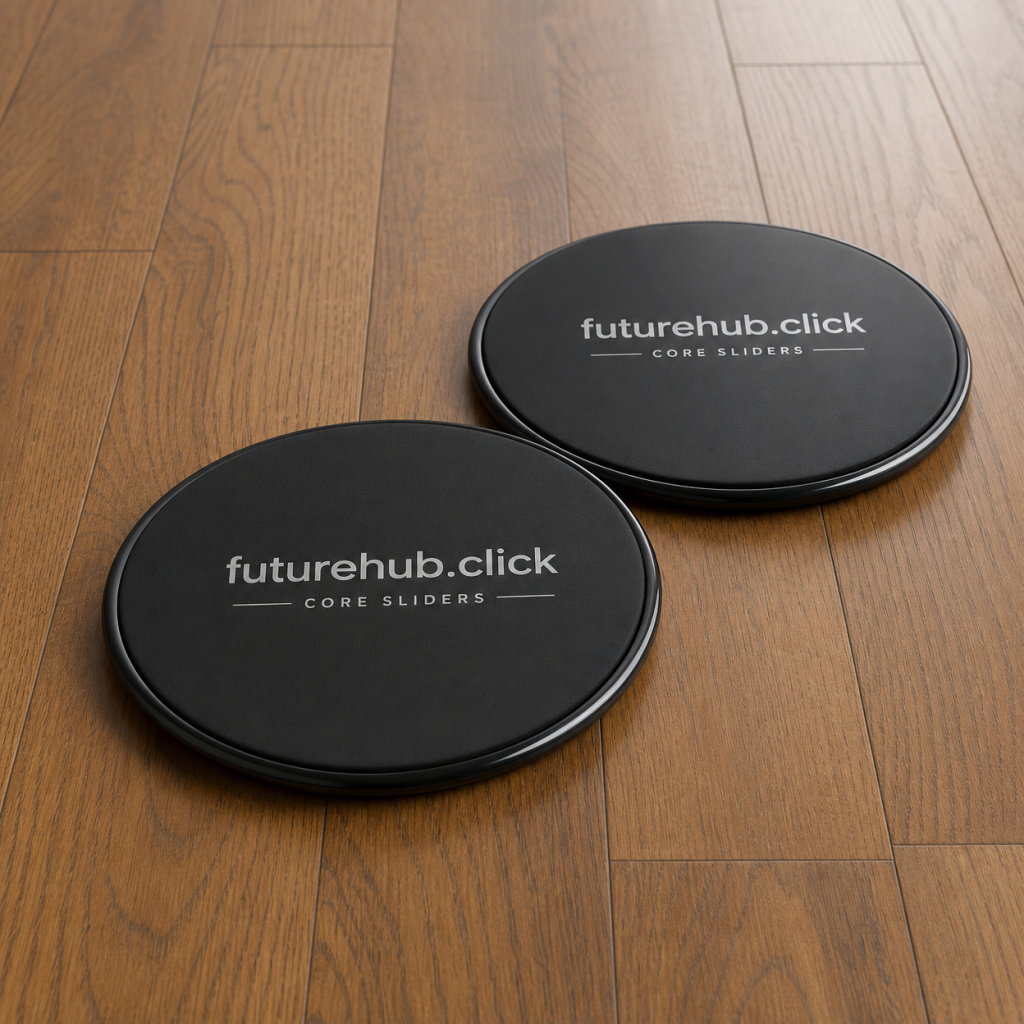
 Few pieces of fitness equipment deliver such remarkable results relative to their size and cost as core sliders. These small, typically circular discs sit beneath your hands or feet and allow them to glide smoothly across almost any surface, transforming ordinary floor exercises into intense, full-body challenges that specifically target stability, coordination, and core strength.
 Few pieces of fitness equipment deliver such remarkable results relative to their size and cost as
 **What Are Core Sliders?**
Core sliders, also known as gliding discs or sliding discs, are flat discs approximately 18 to 22 centimeters in diameter. One side is smooth and designed to slide across hard floors, while the other side is made from a grippier material suitable for use on carpet. Many sets include dual-sided discs that work on both surfaces, or two separate disc types for different flooring environments.
Despite their minimal appearance, core sliders fundamentally change the mechanics of exercises. When your hands are on sliders during a mountain climber, for instance, your feet can no longer push off a fixed surface. The sliding action means your core must constantly work to control the movement and prevent your hips from rotating or dropping. The result is dramatically greater core activation compared to the standard floor version of the exercise.
**The Science Behind Slider Training**
The instability introduced by sliders increases muscle activation throughout the kinetic chain. When a surface is unstable or unpredictable, the nervous system responds by recruiting more motor units across multiple muscle groups to maintain control. This is the same principle that makes balance boards and BOSU trainers effective, but sliders introduce a different type of challenge — one focused on resisting linear and rotational forces rather than managing vertical instability.
Research on unstable surface training consistently shows enhanced activation in the core musculature, particularly the transverse abdominis and obliques, which are the deep stabilizing muscles that protect the spine and transfer force between the upper and lower body. These deep muscles are often undertrained with traditional exercises that prioritize prime movers.
**Exercises That Transform with Sliders**
The range of exercises made possible or enhanced by sliders is surprisingly broad. Here are some of the most effective movements across different categories:
For core and abdominal training, pike slider exercises are among the most challenging. Starting in a push-up position with feet on sliders, you slide both feet toward your hands while keeping your legs straight, forming an inverted V shape at the top. This move demands exceptional hamstring flexibility and core control. Knee tucks, body saws, and slider planks with arm slides provide additional variations.
For lower body training, reverse lunges on sliders remove the impact of stepping back on a fixed surface and require the standing leg to work harder to control descent and return. Lateral lunge slides, where one foot slides out to the side while the other leg bends into a squat, comprehensively target the adductors, abductors, and glutes simultaneously.
Upper body slider exercises, though less common, are highly effective. Slider push-up variations, where one or both hands slide outward during the descending phase, challenge chest, shoulder, and tricep strength through an extended range of motion while demanding significant core stabilization.
**Who Benefits Most from Core Sliders**
Core sliders are genuinely accessible to a wide range of fitness levels. For beginners, they provide an engaging and effective way to train without equipment and learn fundamental movement patterns. For advanced athletes, they introduce new challenges that break training plateaus by targeting stability and control in ways traditional weightlifting does not.
They are particularly valuable for athletes in sports requiring rotational power, such as tennis, golf, baseball, and combat sports. The oblique engagement demanded by slider rotational exercises directly transfers to athletic performance. Physical therapy professionals also use sliders extensively for rehabilitation of knee, hip, and shoulder injuries because the sliding motion reduces compressive forces on joints while still building functional strength.
**Getting the Most from Your Sliders**
For effective slider training, surface preparation matters. Ensure your hard floor is clean and free of debris that could cause the disc to catch unexpectedly. On carpet, ensure the carpet is not so thick that the disc sinks in and loses its sliding quality.
Begin with controlled movements at a slow tempo to develop the coordination and strength required before progressing to dynamic, fast-paced slider circuits. The feedback from sliders is immediate: if your form breaks down, you will feel the instability instantly. This makes them excellent teaching tools for developing body awareness.
Incorporating sliders into circuit training adds metabolic conditioning benefits. A circuit of slider mountain climbers, pike slides, lateral lunges, and body saws performed for rounds of 30 to 45 seconds per exercise with minimal rest creates a highly effective cardiorespiratory and strength challenge using only a small floor space and two discs.
**Conclusion**
Core sliders are a brilliant example of equipment where simplicity and effectiveness converge. They weigh almost nothing, cost very little, can be used anywhere, and significantly intensify a wide range of exercises. Whether integrated into warm-up routines, used as the primary training tool in bodyweight workouts, or added to advanced athletic conditioning programs, sliders consistently deliver functional improvements in core strength, stability, and overall movement quality. Advanced Programming: Incorporating sliders into a comprehensive periodized training program requires strategic planning. In a hypertrophy-focused block slider exercises can be performed for 12-15 repetitions creating metabolic stress and muscle damage. During a strength-focused block slider exercises can be modified to challenge stability and control at lower repetition ranges. During a power-focused block explosive slider movements create power development stimulus that transfers to athletic activities. Neurological Adaptation: The nervous system adapts to slider training through increased recruitment of stabilizing muscles and improved proprioceptive awareness. With consistent slider training the nervous system becomes more efficient at predicting instability. Research on proprioceptive training shows that athletes who incorporate instability training demonstrate superior balance and injury prevention. Integration: Sliders can be incorporated into training programs that also use weights and machines. A typical session might begin with traditional compound movements then continue with slider-based work and conclude with flexibility work.
